( ❧ ) Notes & musings

From the studio journal

Notes on painting, teaching, and the creative life in Tucson.

June 18, 2026 · 6 min read

Finding the Desert Light: How the Sonoran Landscape Shapes Every Painting I Make
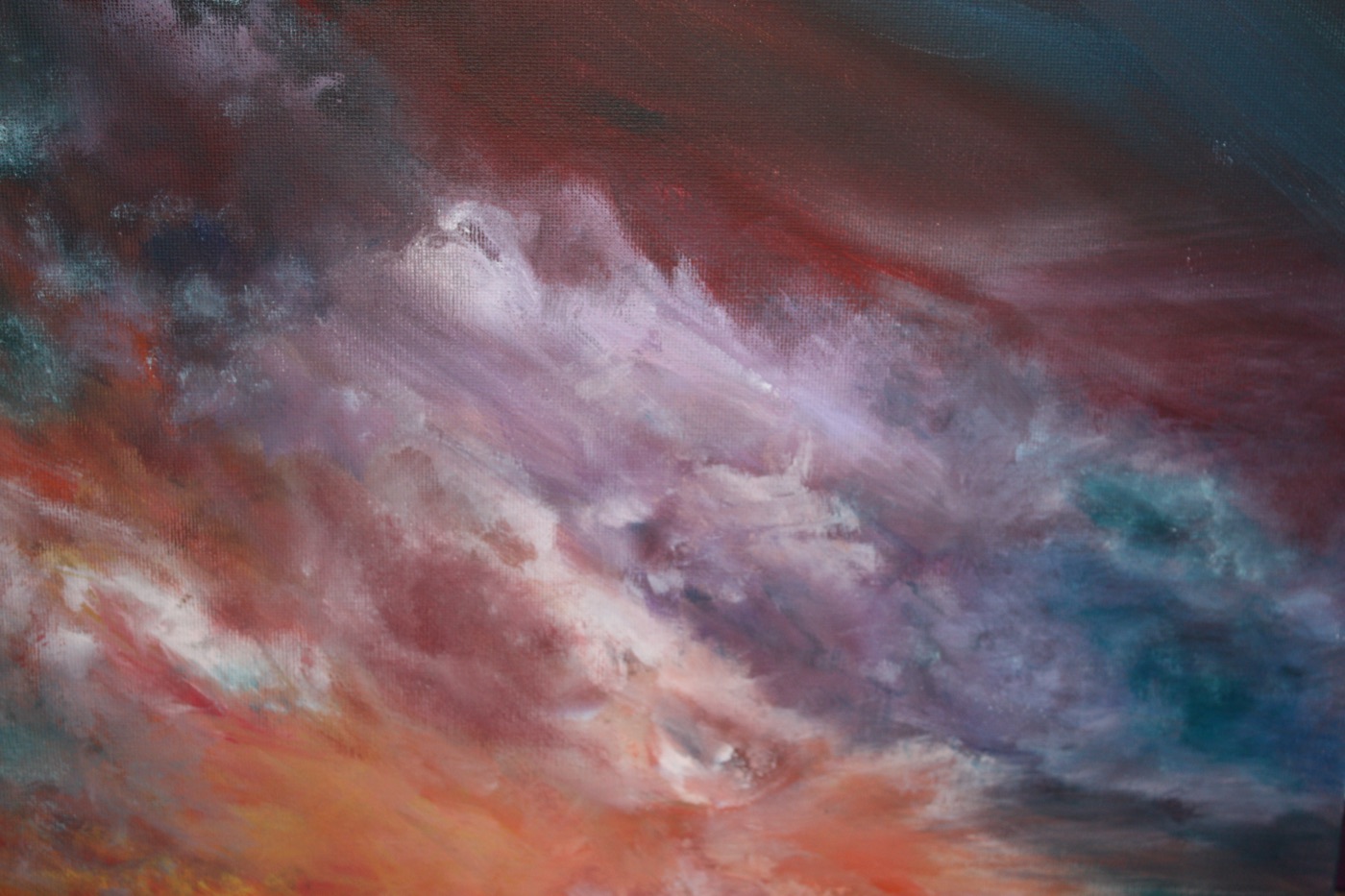
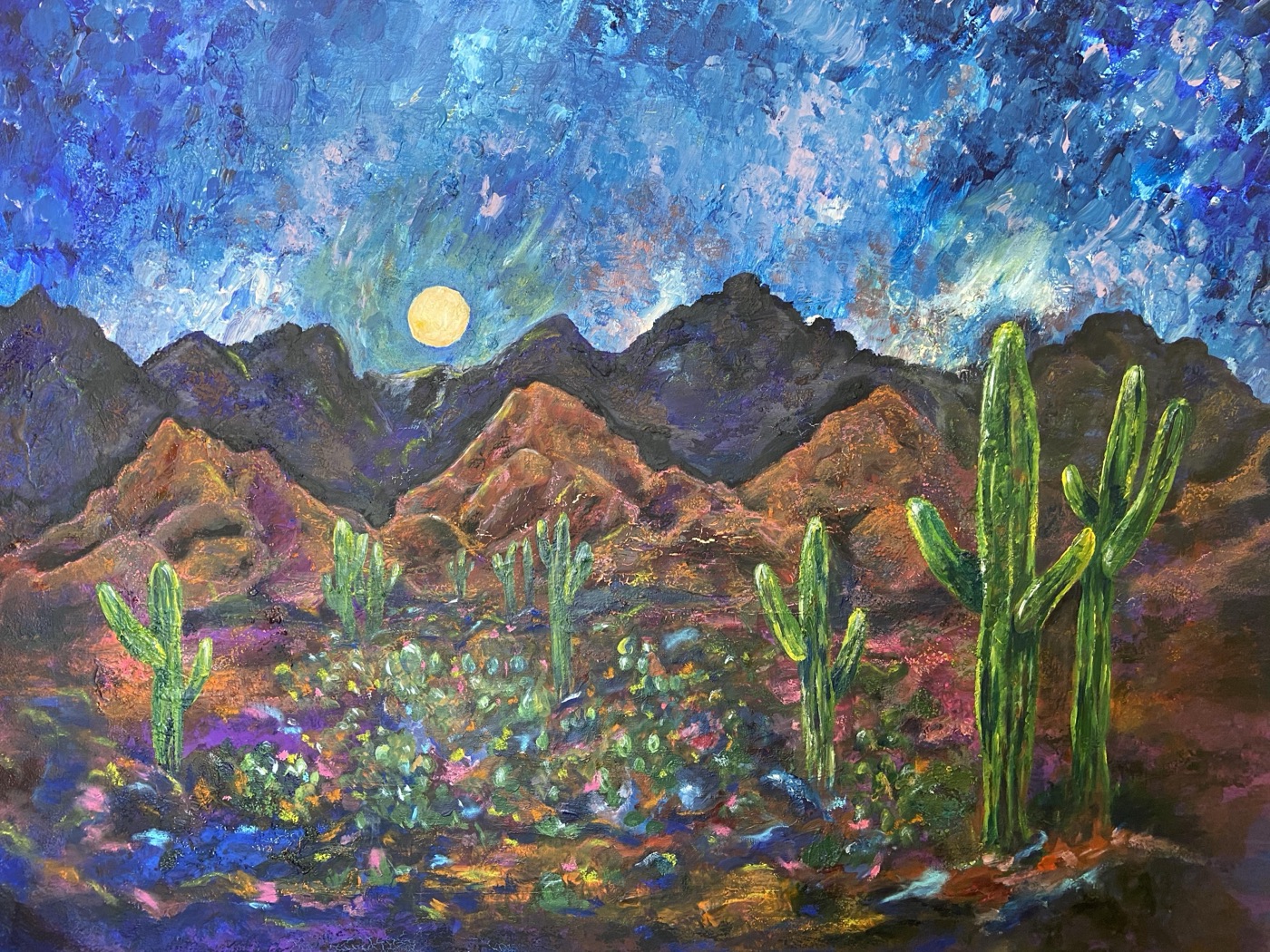
Diane Crenshaw's acrylic painting of a glowing desert sky over the Sonoran landscape

People ask me all the time why so much of my work comes back to the sky. Honestly, I don't have much of a choice. I live under one of the most restless skies in the country, and it has a way of demanding to be painted.

It's not the sunsets that get me most, though they're lovely. It's the clouds. Tucson clouds build all afternoon into these towering, complicated shapes, then they shift again before you've finished looking at them. I'll be standing at my easel and the exact cloud I started sketching has already turned into something else entirely. I've learned to paint from memory and feeling as much as from what's directly in front of me, because the sky simply will not hold still long enough to be copied.

There's a lesson in there for painting and for life, I think. You can't wait for the "right" moment to capture something, because the moment is already changing shape while you reach for your brush. So I've stopped trying to freeze the sky and started trying to catch its mood instead: the particular blue right before a monsoon storm, the way light pools at the edge of a cloud bank, the strange gray-gold of late afternoon in July.

Every canvas I make starts with the same question: what did the sky feel like today? The answer is never twice the same, and that's exactly why I keep painting it.
May 22, 2026 · 5 min read

Raising Creative Kids: Why Art Classes for Children Build More Than Just Skills

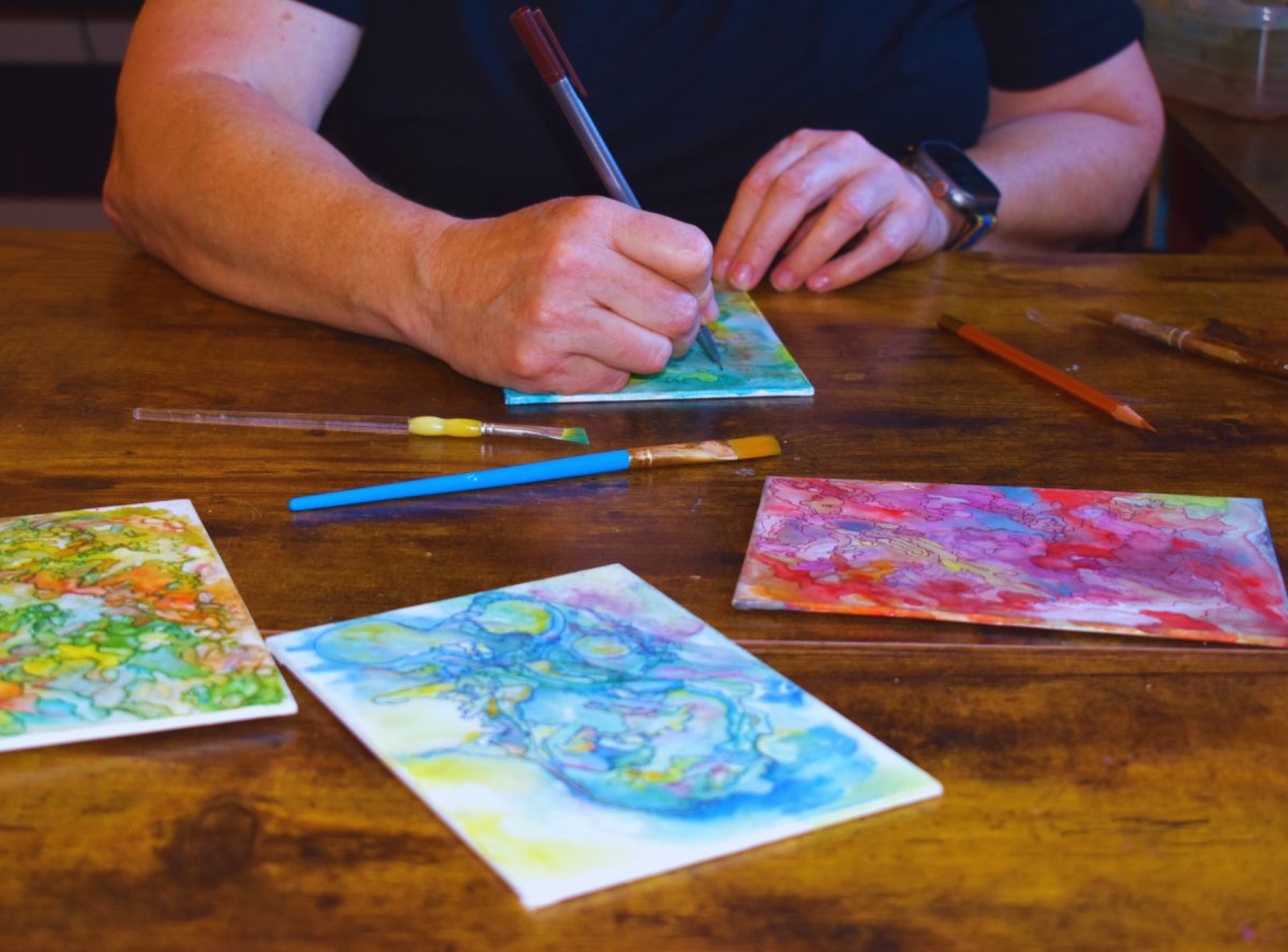
A child's hands mixing watercolor paint at a table during a Creative Sage class

Parents often ask me some version of the same question when they drop their child off for a first class: "Will they actually learn anything, or is this just playing with paint?" I understand the worry. Time and money are both limited, and it's fair to want to know what a class is really building.

My answer is always the same: yes, it's playing, and yes, that's exactly the point. When a child mixes two colors and gets a third they didn't expect, they're testing a hypothesis. When they decide a collage needs one more piece of paper in the corner, they're making a judgment call about balance and composition, even if they'd never use those words. Art class is one of the few places left where a child can fail at something completely, right in front of an adult, and have that failure be treated as interesting rather than a problem to fix.

What I notice most, session after session, isn't the finished piece. It's the posture change. Kids who come in tight-shouldered and asking "is this right?" loosen up by week three. They start narrating their own choices instead of asking for permission. That confidence doesn't stay in the studio. Teachers and parents tell me it shows up in how a child approaches a hard math problem or a new friendship too.

Small class sizes make this possible. With no more than ten kids in the room, I can actually watch each child work, notice what they're drawn to, and nudge gently instead of directing. That's the part that builds something real, not just a nice drawing to put on the fridge, though we get plenty of those too.

April 9, 2026 · 5 min read

The Art of Slowing Down: What Meditative Art Sessions Offer

Diane Crenshaw's painting exploring quiet, layered color used during meditative art sessions

I'm not a therapist, and I want to be upfront about that. But I've spent enough years sitting across a table from people holding a paintbrush to know that something real happens when you slow down and let your hands lead for a while.

A meditative art session doesn't ask you to make anything good. That's usually the first thing I tell people, because it's the belief that trips everyone up before they even start: the fear of doing it wrong. Once that pressure is off the table, people settle into something quieter. Breathing changes. Shoulders drop. Conversations that started nervous get softer and more honest by the end of ninety minutes.

What I love about this practice is that it doesn't require any art background at all. We might start with a simple repeated mark, or a wash of color with no plan for what it becomes. The point isn't the technique. The point is giving your mind one uncomplicated thing to focus on so everything else has room to settle.

People leave with a piece of paper, sure, but more often they leave with something harder to name: a little more space in their chest, a little more quiet in their head. That's not a replacement for anything else in your life. It's simply its own kind of good.

Get new posts and class dates by email

Check the newsletter box on the contact form and Diane will send new journal posts and upcoming class dates straight to your inbox. No spam, ever.

Join the studio list